
Yu Luo is currently a 2nd-year Ph.D. student at Nankai University, working under the supervision of Prof. Yongqian Sun. He received his Bachelor’s degree in Software Engineering from Nankai University in 2025. His research interests include AIOps, multi-agent systems, and reinforcement learning, with a specific focus on building collaborative multi-agent systems that leverage LLM reasoning, memory, RAG, and RL to solve complex downstream tasks. He has published 10 papers at venues including ICML, EMNLP, KDD, ASE, and TOSEM.
My recent research interests lie in: (i) Building self-evolving agents via parametric approaches; (💡 Agentic tool-use, self-evolution) (ii) Tackling belief state challenges in long-horizon and multi-turn agent interactions, with a particular focus on active reasoning tasks. (💡 Active Reasoning)
🔥 News
- 2026.09: 🚀 Graph of States has surpassed 30K views across all platforms and received 100+ stars on GitHub!
- 2026.08: 🎉🎉 Our paper “PAGE” is accepted by EMNLP 2026
- 2026.08: 🎉🎉 Our paper “OpsMem” is accepted by ISSRE 2026
- 2026.08: 🎉🎉 Our survey “Why Transformers?” is accepted by TOSEM 2026
- 2026.07: 🎉🎉 I start my internship as an algorithm engineer at Alibaba Cloud
- 2026.07: 🎉🎉 Our papers “OpsAgent” and “KRCA” are accepted by ASE 2026
- 2026.05: 🏅 I received Gold Reviewer Award from ICML 2026
- 2026.05: 🎉🎉 Our paper “Graph of States” is accepted by ICML 2026
- 2025.09: 🎉🎉 Our papers “TrioXpert” and “DynamicRegress” are accepted by ASE 2025
- 2025.08: 🎉🎉 Our paper “PIPCell” is accepted by ISSRE 2025
- 2025.06: 🎉🎉 I start my internship as an algorithm engineer at Lenovo
- 2025.05: 🎉🎉 Our paper “FlowXpert” is accepted by KDD 2025
📝 Publications
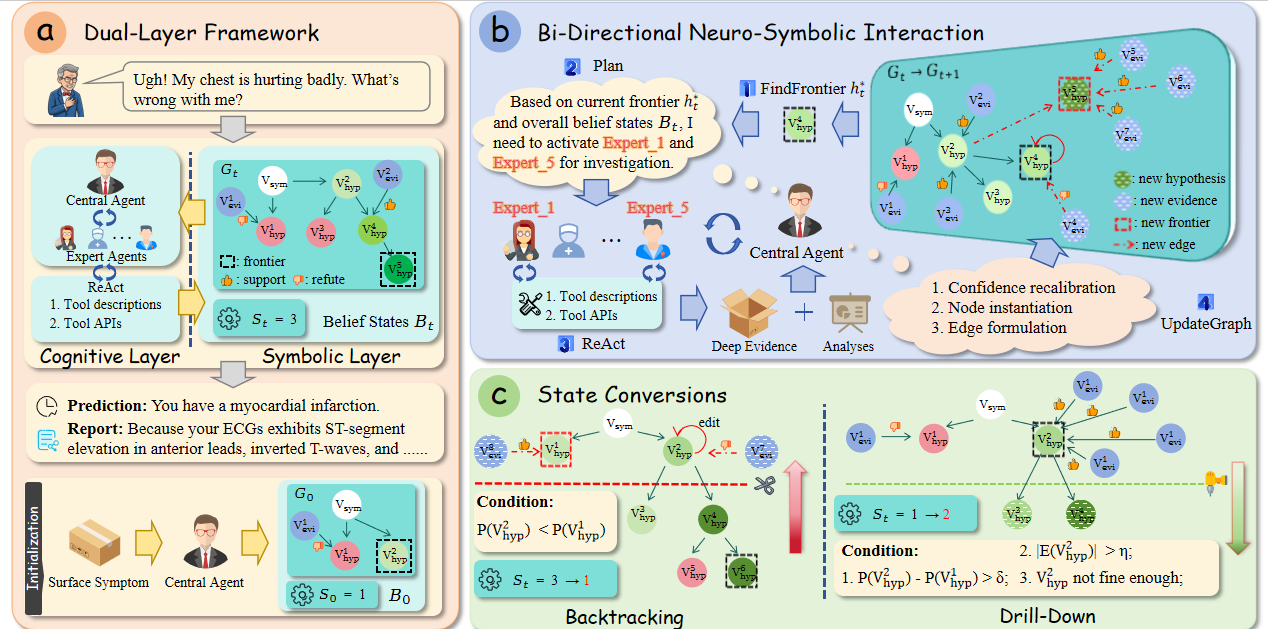
Graph of States: Solving Abductive Tasks with Large Language Models
Yu Luo, Rongchen Gao, Lu Teng, et al.
- Graph of States is a general-purpose neuro-symbolic framework for abductive reasoning that grounds multi-agent collaboration in structured belief states, uses a causal graph and state machine to constrain reasoning transitions, and turns unconstrained exploration into a directed search that consistently improves performance on complex real-world abductive tasks.
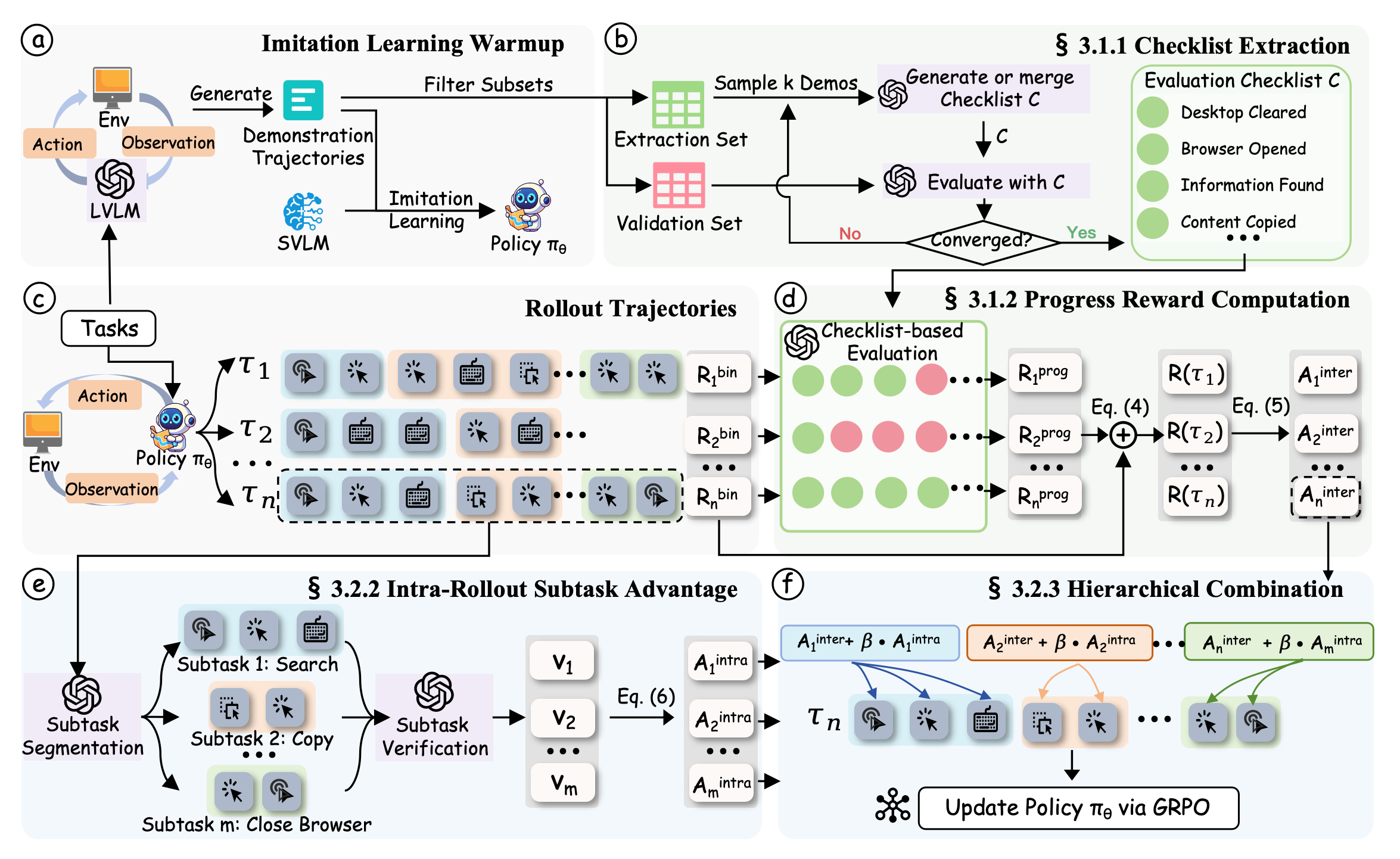
PAGE: Progress-Aware Reinforcement Learning with Hierarchical Advantage for Long-Horizon GUI Agents
Qingliang Zhang, Yongqian Sun, Yuanhong Cai, Xiaohui Nie, Jiaju Wang, Yu Luo, et al.
- PAGE is a progress-aware reinforcement learning framework for long-horizon GUI agents that replaces sparse outcome feedback with automatically constructed progress rewards and combines inter-rollout and subtask-level advantages for fine-grained credit assignment. With an 8B vision-language model, PAGE achieves a 79.3% average success rate across three long-horizon GUI scenarios, outperforming the GRPO baseline by 16.0 percentage points.
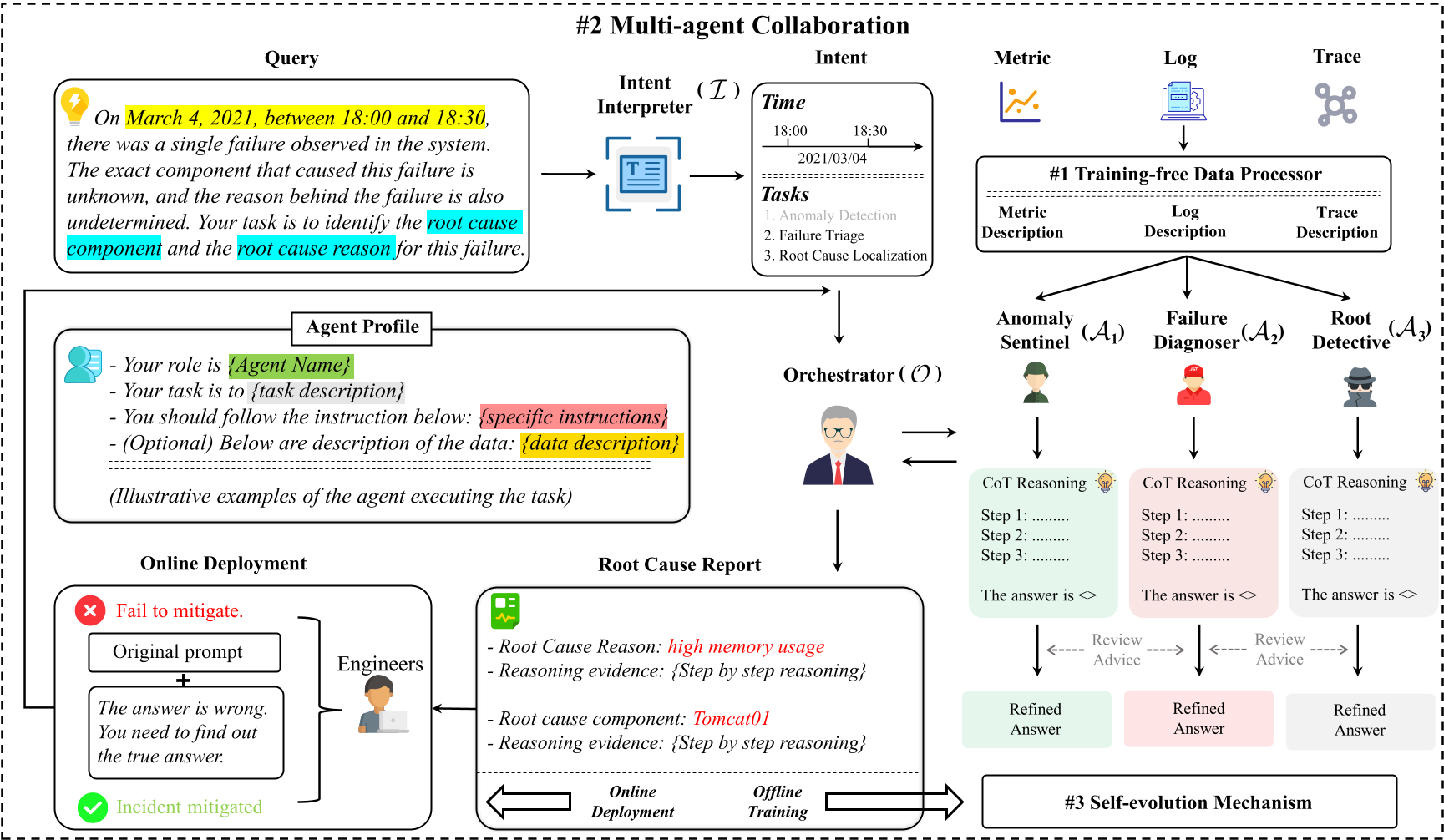
OpsAgent: An Evolving Multi-agent System for Incident Management in Microservices
Yu Luo, Jiamin Jiang, Jingfei Feng, et al.
- OpsAgent is a lightweight and self-evolving multi-agent framework for incident management that transforms heterogeneous observability data into structured textual evidence, coordinates specialized agents for transparent diagnosis, and continuously improves through both model refinement and accumulated operational experience.
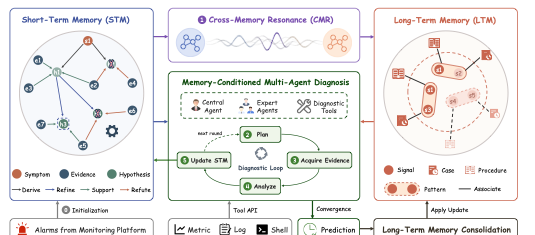
OpsMem: Dual-Memory Reasoning with Cross-Memory Resonance for Failure Diagnosis
Yongqian Sun, Rongchen Gao, Yu Luo, Wenwei Gu, et al.
- OpsMem is a dual-memory framework for failure diagnosis that couples a graph-structured short-term memory of the evolving diagnostic state with a long-term memory of reusable operational experience. Through cross-memory resonance, it activates state-relevant cases and procedures during multi-agent diagnosis, then consolidates solved incidents into long-term memory for continual improvement.
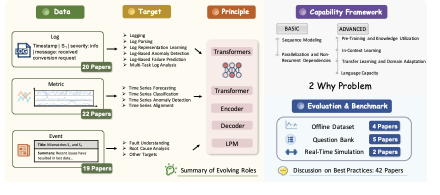
Binpeng Shi, Shenglin Zhang, Jingya Wang, Bowen Hao, Minyi Shao, Yu Luo, et al.
- This survey provides a comprehensive overview of Transformers in AIOps, organizing representative work by data modality, operational target, modeling principle, and methodological approach. It further explains why Transformers suit AIOps through a capability framework, consolidates evaluation resources and strategies, and distills practical guidance for applying Transformer-based systems in real operations.
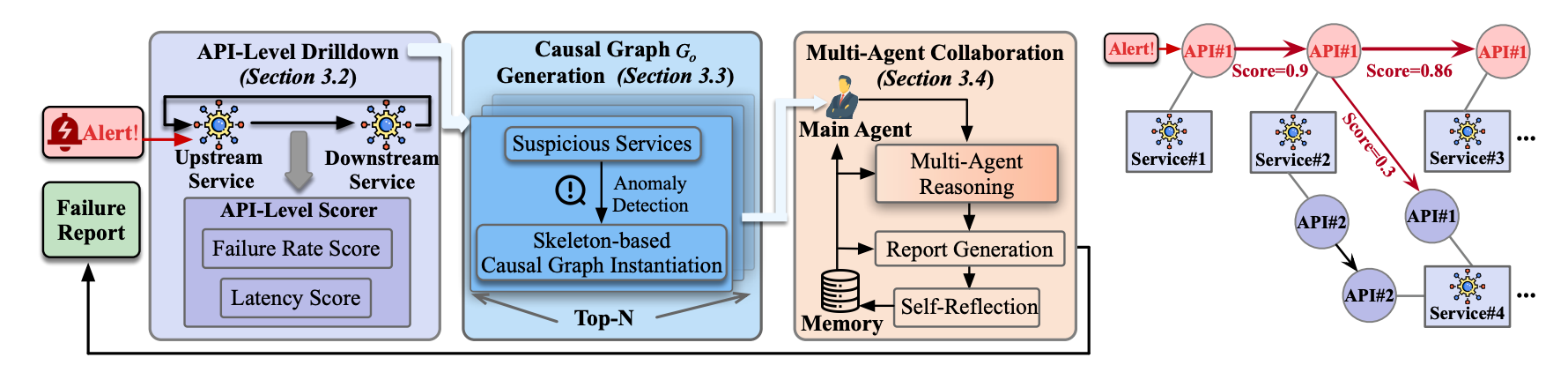
KRCA: An Efficient Root Cause Analysis System in Hyper-Scale Microservice Systems via Agentic AI
Jiamin Jiang, Jingfei Feng, Yu Luo, Qingliang Zhang, et al.
- KRCA is an end-to-end root cause analysis system for hyper-scale microservice systems that uses API-level drilldown to prune massive service dependencies, instantiates skeleton-based causal graphs from anomalous metrics, and coordinates memory-augmented agents to verify causality and generate failure reports. Evaluated on 300 real-world failures and deployed at Kuaishou, it improves root-cause localization and failure-type classification while reducing average diagnosis time by 77.3%.
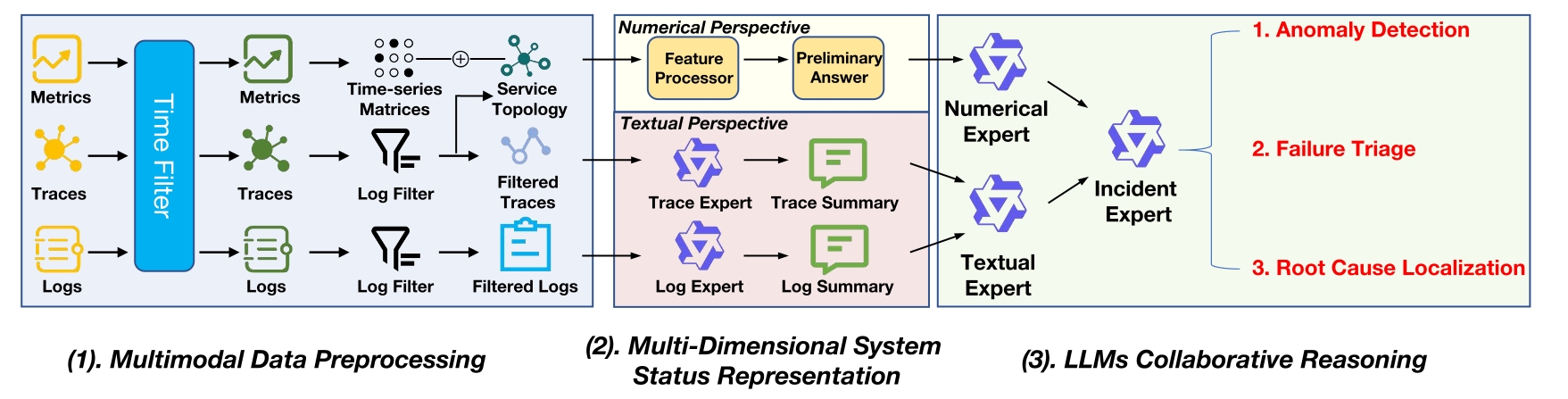
TrioXpert: An Automated Incident Management Framework for Microservice System
Yongqian Sun, Yu Luo, Xidao Wen*, Yuan Yuan, et al.
- TrioXpert is an end-to-end framework for incident management in microservice systems that leverages multimodal data and LLM-based collaborative reasoning to handle AD, FT, and RCL tasks with high interpretability. It significantly outperforms baselines across multiple benchmarks.
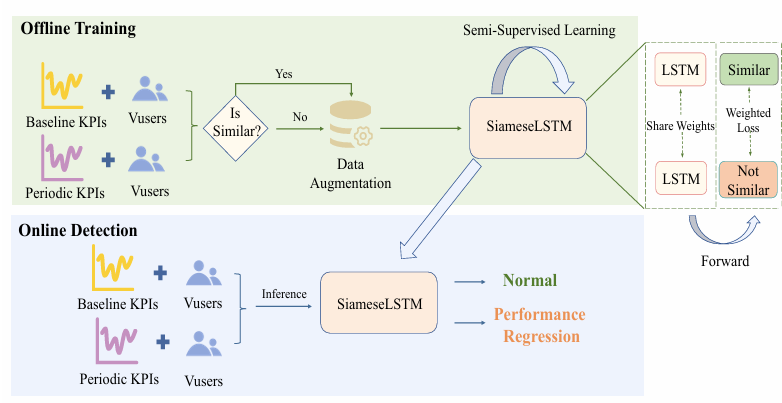
Adaptive Performance Regression Detection via Semi-Supervised Siamese Learning
Yongqian Sun, Mengyao Li, Xiao Xiong, Lei Tao, Yimin Zuo, Wenwei Gu, Shenglin Zhang*, Junhua Kuang, Yu Luo, et al.
- DynamicRegress is an adaptive performance regression detection framework that jointly models multi-dimensional KPIs and workload context with a semi-supervised Siamese LSTM, enabling accurate comparison of variable-length traces under dynamic loads. Deployed on Huawei Cloud, it achieves an F1 score of 0.958 with real-time detection latency.
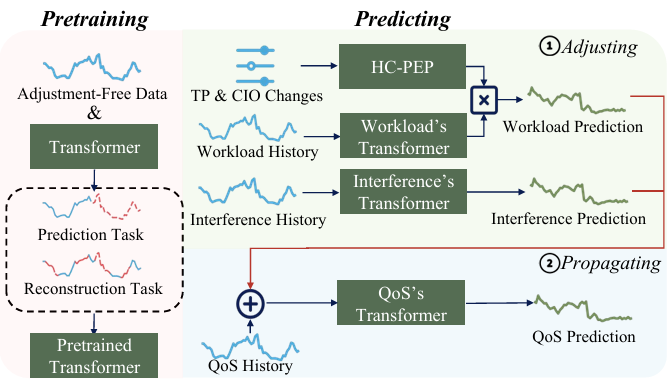
Predicting the Impact of Parameter Adjustments on Cellular Networks
Yongqian Sun, Qingliang Zhang, Yu Luo, Mingjie Li*, et al.
- PIPCell is a two-phase predictive framework for estimating how transmission power and cell individual offset adjustments affect cellular network metrics, combining domain-knowledge calibration with graph-organized Transformers to model intervention effects and inter-metric dependencies. On real-world China Mobile data, it improves over strong baselines by up to 25.8% in RMSE and 59.0% in sMAPE.
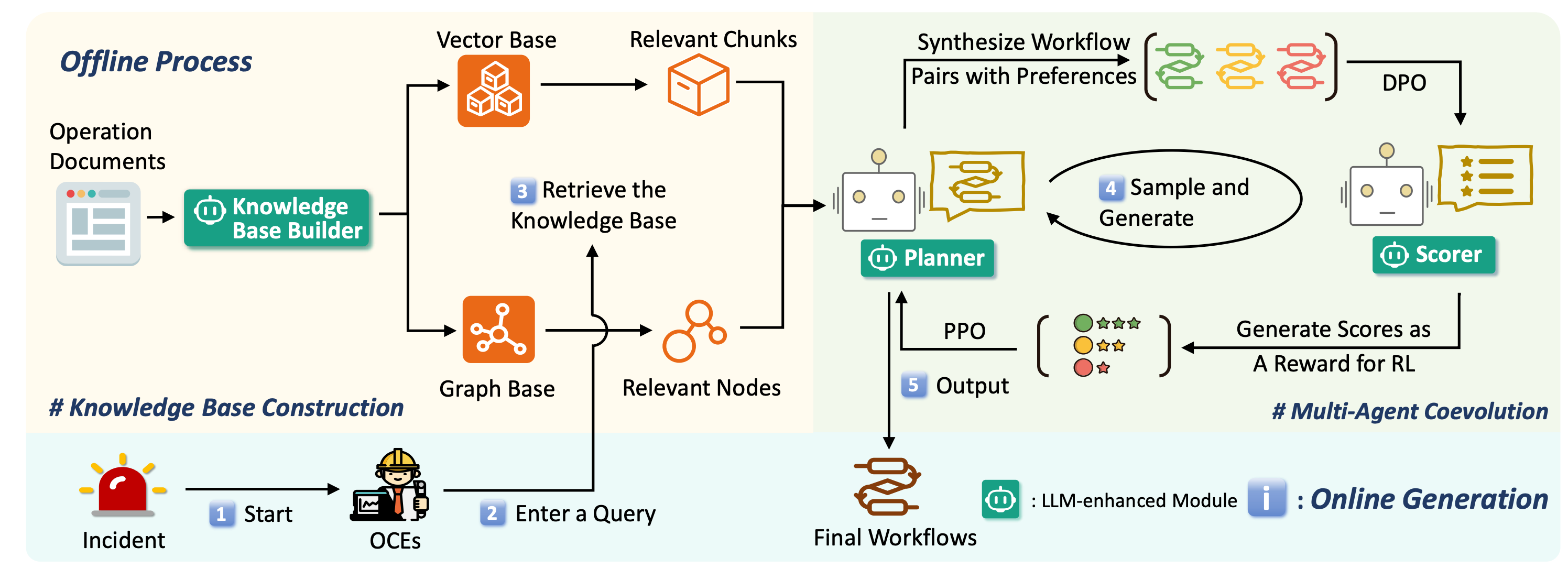
Binpeng Shi, Yu Luo, Jingya Wang, Yongxin Zhao, et al.
- FlowXpert is a troubleshooting workflow orchestration framework that uses LLMs to build an incident-aware knowledge base and applies reinforcement learning with AI feedback to improve workflow generation. Evaluated on OpsFlowBench and deployed in Huawei Cloud’s datacenter, it demonstrated effectiveness in supporting engineers and AI agents.
🎖 Honors and Awards
- 2025.10 🎓 Scholarship for Postgraduate Recommendation (3/51), Nankai University
- 2025.10 🎓 Scholarship for Merit and Competence, Nankai University
- 2025.06 📝 Distinguished Undergraduate Thesis Award, Nankai University (南开大学校级优秀毕业论文)
- 2024.10 🎓 Scholarship for Merit and Competence, Nankai University
- 2023.10 🎓 Scholarship for Academic Excellence, Nankai University
📖 Educations
- 2025.06 - present, PhD, Software Engineering, Nankai University, China, advisor Yongqian Sun
- 2021.09 - 2025.06, undergraduate, Software Engineering, Nankai University, China
💻 Internships
- 2026.07 - present, Algorithm Engineer Intern at Alibaba Cloud, China, Mentor: Xidao Wen.
- 2025.06 - 2026.01, Algorithm Engineer Intern at Lenovo, China.
🎤 Invited Talks
- 2026.06: “Graph of States: Solving Abductive Tasks with Large Language Models”, AITIME Community, Link
⛪ Services
ICML26 (Gold Reviewer) EMNLP26 (Reviewer)